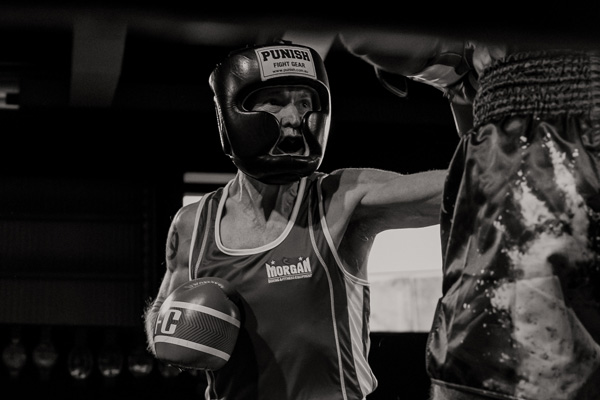
Why men over 40 don't compete in sport
Why Men Over 40 Don't Compete (And Why That's Not the Real Reason)
You know the feeling.
It's late. The kids are in bed. You're on the couch with your phone, and somehow you end up watching a Masters boxing event on YouTube. Or a Masters triathlon. Or a competitive shooting match full of men in their 50s and 60s going at it like it actually matters.
And something stirs.
Not nostalgia exactly. Something more uncomfortable than that. A quiet voice that says — could I still do that?
Then you close the tab. Go to bed. Repeat the cycle next week.
If that's you, this post is for you.
I Asked Reddit a Question
A few weeks ago I posted a question in a community of men over 40.
The question was simple:
"Men over 40, did you ever have a sport you always wanted to compete in but never did? What stopped you?"
I expected the usual answers. Time. Fitness. Age. Money. The sensible, practical barriers that explain why men don't do things.
That's not what I got.
The post hit 5,800 views in 24 hours. Twenty-three men responded. And what they said stopped me in my tracks, not because it was surprising, but because it was so consistently, painfully honest.
What Men Actually Said
A 45-year-old man described by a woman in the thread who went and asked her coworker directly said this:
"To be blunt, I don't want to fail in front of people."
Not "I'm not fit enough." Not "I don't have time." Not "it's too expensive."
The fear of being seen trying. And falling short.
A 41-year-old former boxer talked about a wrist injury he sustained defending himself in his late 30s. Took over a year to heal. Still training. Never competed. Still thinking about it. His reason?
"I don't heal as quickly as I used to."
Underneath that — the fear that if he commits to competing and breaks down again, he loses the possibility of ever doing it. Better to keep the dream alive than risk closing the door permanently.
A 53-year-old man told a story that I keep coming back to.
He joined a fitness programme. Trained consistently. Turned out to be naturally athletic — stronger and more capable than he'd realised. The gym owner pulled him aside and told him he needed to enter their quarterly competition. Clubs coming from all over. A big course.
He didn't go.
Instead he went to watch his niece compete. Sat in the stands. Cheered. Looked at the course.
Realised he probably could have won his age class.
Then Covid hit. The gyms closed. He never went back.
He ended his comment with a joke about a "Greatest Dad Bod" trophy his daughters gave him. Good line. But a few sentences earlier he'd written something else:
"There were times I regretted worrying so much about failing and wishing I'd tried."
A man who'd been playing table tennis casually for 20 years discovered competitive amateur tournaments almost by accident. Entered one. Got properly beaten. Felt the sting of it.
Then wrote this:
"It makes me want to train 24/7 — but I'm a grown man."
That last line. But I'm a grown man.
As if wanting this — really wanting to compete, to improve, to test yourself — is somehow self-indulgent. As if the desire to matter to yourself is something you're supposed to have outgrown by now.
The Pattern Nobody Talks About
Here's what struck me across all 23 responses.
The barriers men named, when they were being honest, had almost nothing to do with fitness, age, money, or time.
They were about fear.
Specifically: the fear of being seen trying and falling short.
The vulnerability of walking into a room where everyone else seems to know what they're doing, and not knowing if you belong there. The specific dread of showing up — at 41, at 53, at whatever age — and being exposed as someone who doesn't quite make the grade.
I don't want to fail in front of people.
That one sentence, from a 45-year-old man who was asked point blank, is the most honest piece of customer research I've encountered in months of building a coaching programme for men in exactly this position.
Because he didn't say it to me. He said it to a colleague. Unprompted. In plain language.
And I'd bet good money that the boxer with the wrist injury, the man who watched his niece compete instead of entering himself, and the table tennis player who called himself "a grown man" for wanting more — they'd all say the same thing if you asked them directly.
The barrier isn't physical.
It's the fear of being seen.
Why This Matters More Than You Think
Here's something nobody in the midlife wellness industry is saying:
The competitive instinct doesn't die when you hit 40. It goes underground.
Decades of providing for everyone else — the job, the mortgage, the kids' schedules, the endless list of things that needed doing — didn't extinguish it. They just buried it. Under enough obligation and routine that you stopped hearing it clearly.
But it's there.
You feel it when you watch those YouTube videos at midnight. You feel it when you read about a Masters event in your old sport. You feel it in the specific irritation of watching men your age doing the thing you told yourself you'd get back to.
That irritation isn't envy. It's information.
It's the competitive part of you, the part that got buried under decades of being everything to everyone else — ,saying: this is still yours if you want it.
And here's what I've learned from my own experience, and from the men I've been talking to:
When a man suppresses that instinct for long enough — when he keeps closing the tab and going to bed — it costs him something he can't name but feels every day.
It shows up as restlessness. Low-grade dissatisfaction. The sense that something is missing but you can't quite put your finger on what.
It's not a mid-life crisis. It's a man who hasn't competed in decades, and knows it
The Door Exists. Most Men Don't Know It's There.
Here's what the 23 men in that Reddit thread mostly didn't know — and what I want to say clearly to anyone reading this:
Masters sport divisions exist for exactly this reason.
Almost every competitive sport has an age-division structure for adult competitors. Masters boxing. Masters athletics. Masters swimming. Masters cycling. Precision rifle shooting. Powerlifting. Triathlon. Rugby league. Rowing. The list is longer than you think.
These aren't consolation divisions for people who couldn't make it as professionals. They are genuinely competitive events, run by real sporting bodies, for men and women who started late, came back after years away, or simply found their competitive drive later in life.
One man in that Reddit thread has been competing in precision rifle shooting in his 40s and describes the community as "the tightest groups of them all." He's planning his first NRL Hunter match when his kids turn 18. He's already training.
Another man in his 60s — who only got interested in competition in his 50s — competes in age group races and notes that his performance holds up well as most of his peers decline.
A 53-year-old was strong enough to win a competitive fitness event. He just didn't go.
The gap isn't capability.
The gap is the on-ramp. The structured pathway from I want to do this to I am actually doing this. The thing that shows a man the door exists and then walks him through it.
That gap is exactly what I've spent the last several months building.
---
About Me
I'm David. I'm 59 years old. I'm a competing Masters boxer trained by an ex-world champion.
In 2020, my heart stopped for 28 minutes. They brought me back with a defibrillator.
I'd already quit drinking at 49 and rebuilt once. But surviving a cardiac arrest at 54 and choosing to step back into a boxing ringthat clarified something for me that I've been trying to articulate ever since.
A man isn't finished until he decides he is.
I built The Competitive Pursuit Co. because the programme I needed — sport-agnostic, identity-first, structured — didn't exist. The on-ramp from I've always wanted to compete to I am competing was missing.
So I built it.
Not from theory. From the framework I used myself.
---
Where Are You in the Competitive Pursuit?
If you've read this far, you recognise yourself somewhere in it.
Maybe you're the 45-year-old who doesn't want to fail in front of people.
Maybe you're the boxer who never competed.
Maybe you're the man on the couch at midnight watching other men compete and closing the tab.
I built a short quiz — 7 questions, under 5 minutes — that maps exactly where you are in the competitive pursuit and what a realistic first step looks like from your specific starting point.
No email required to start. No pitch waiting at the end.
Just clarity on where you stand — and what's actually in the way.
[Take The Starting Gun quiz here → link]
If the door has been sitting there unopened for long enough — this is where you start.
David is the founder of The Competitive Pursuit Co. and the creator of the CSDA framework — the four-stage methodology that guides men from Commitment to the Arena. He competes as a Masters boxer at 59.
